Program Details
Industry:
Supply Chain & Operations Management
Program Highlights:
Sales Topics
Selling Techniques
Sales Prospecting
Business Writing
Lead Generation
Overcoming Objections
Sales Planning
Sales Strategy
CRM, Negotiation, and Sales Process
Sales Frameworks
Gaining Product Knowledge
Sales Tools, Techniques, and Methodologies
The 5 Cs of Sales – Foundational Framework
The 7 Ps of Marketing Mix
Customer Relationship Management (CRM)
Consultative Selling Techniques
Sales Funnel and Pipeline Management
Customer Needs Analysis
Effective Communication and Presentation Skills
Closing Techniques and Deal Management
Sales Performance Measurement and Improvement.
Core Logistics Elements
Designing Logistics Networks
Balancing Delivery Options
Managing Logistics Relationships
Logistics Excellence Analysis
3. Logistics Information Systems
Logistics Information Systems
Outbound Information Flow
WMS (Warehouse Management System) Benefits and Challenges
TMS (Transportation Management System) Benefits and Challenges
Order Fulfillment IT Systems and Strategies
ERP Systems and Logistics Integration
4. Logistics Finance
Customer Financing
Benefits and Risks of Customer Financing
Key Players in the Reverse Finance Space
Pricing Power and Payment Term Strategies
Understanding Supply Chain Finance
Financial Strategies in Logistics and Supply Chain Management
With ⚛️ AI Tools | And More…..
Modules:
📚
Training Mode:
Online/ Offline / Blended
15
25 HRS
💻
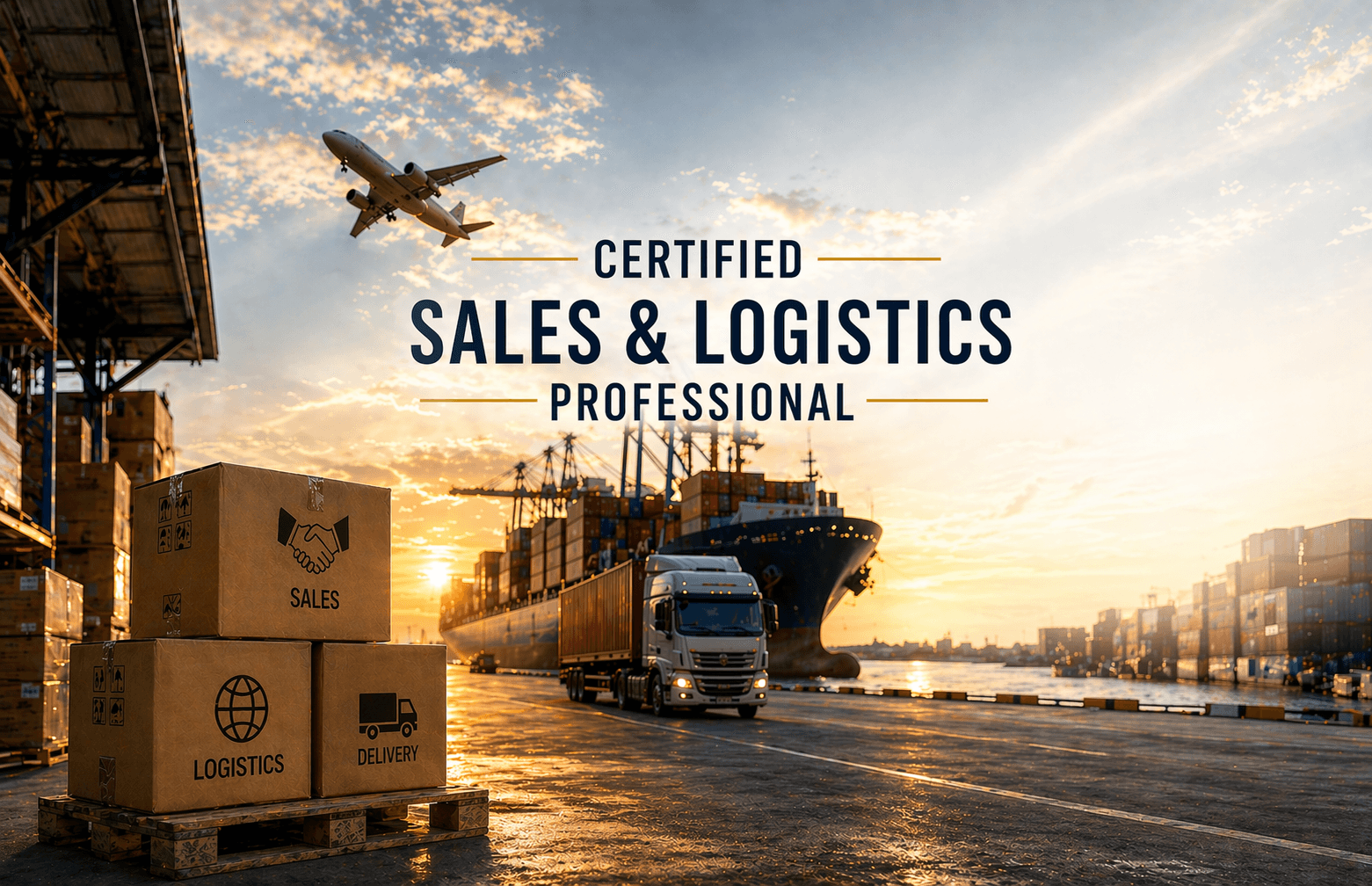
Certified Sales & Logistics Professional
Program Duration:
🕒
What is this course all about?
This course provides comprehensive training in Sales, Logistics, Supply Chain Management, and Business Operations. It covers key areas such as sales strategies, customer relationship management, logistics network design, warehouse and transportation systems, supply chain finance, and business technology integration. The program is designed to develop practical skills, industry knowledge, and professional competencies required to succeed in today's dynamic business environment.
Why is getting trained in this program important?
This program equips professionals with practical knowledge in sales, logistics, supply chain management, and business operations. It helps participants understand industry best practices, improve decision-making skills, and effectively use modern tools and systems. The training enhances professional competence, productivity, and career opportunities in a competitive business environment.
Why do companies hire professionals with this certification?
Companies value certified professionals because they possess industry-relevant skills and a strong understanding of sales, logistics, customer management, and supply chain processes. Certification demonstrates commitment to professional development and the ability to contribute to operational efficiency, customer satisfaction, and business growth.
Who should enroll in this course?
This course is ideal for students, fresh graduates, working professionals, entrepreneurs, and individuals seeking a career in sales, logistics, supply chain, or business operations. It is also valuable for professionals looking to upgrade their skills, improve career prospects, and gain industry-recognized knowledge. No matter the experience level, participants can benefit from the practical and business-focused learning approach.
What career opportunities can this certification create?
This certification can open opportunities in Sales, Business Development, Customer Relationship Management, Logistics Operations, Supply Chain Management, Procurement, Transportation Management, and Warehouse Operations. It strengthens professional credibility and helps candidates stand out in a competitive job market while preparing them for growth into supervisory and managerial roles.
Our Approach
Our approach combines practical learning, industry best practices, real-world case studies, and application-focused training. The program emphasizes skill development, problem-solving, and hands-on understanding of sales and logistics functions to ensure participants can apply their knowledge effectively in the workplace.
Execution
Training is delivered through structured modules, interactive sessions, practical exercises, and business scenarios. Participants gain exposure to real-world challenges and learn proven methods used by successful organizations.
Results
Participants develop job-ready skills, stronger analytical capabilities, improved operational knowledge, and enhanced confidence to perform effectively in professional roles.
Conclusion
The program prepares professionals to meet industry demands by combining knowledge, practical application, and certification, helping both individuals and organizations achieve sustainable success.