Program Details
Industry:
Supply Chain Analytics & Business Intel
Key Learning Outcomes
Master Enterprise Systems (ERP, CRM, SCM): Understand and Implement Key Enterprise Applications That Drive Supply Chain Efficiency and Integration.
Leverage AI and Analytics: Utilize AI-Driven Insights and Predictive Analytics for Demand Forecasting, Inventory Management, and Decision-Making.
Optimize Cloud-Based Solutions: Learn How Cloud Computing and SaaS Platforms Enhance Supply Chain Visibility, Scalability, and Cost-Effectiveness.
Exposure to Automation and RPA: Apply Robotic Process Automation (RPA) and Digital Workflows to Streamline Procurement, Logistics, and Order Management.
Enhance Supply Chain Resilience: Develop Strategies to Mitigate Risks, Manage Disruptions, and Ensure Business Continuity in Volatile Environments.
Utilize Blockchain and IoT: Explore Real-Time Tracking, Transparency, and Security Enhancements Through Blockchain and IoT-Driven Supply Chain Solutions.
Execute Data-Driven Decision-Making: Build Skills in Data Visualization, KPI Monitoring, and Business Intelligence to Drive Operational Excellence.
Apply Industry Best Practices: Gain Hands-On Experience With Real-World Case Studies From Top Global Companies, Translating Theory Into Actionable Strategies.
With ⚛️ AI Tools | And More…..
Modules:
📚
Training Mode:
Online / Offline / Blended
15
25 Hrs
💻
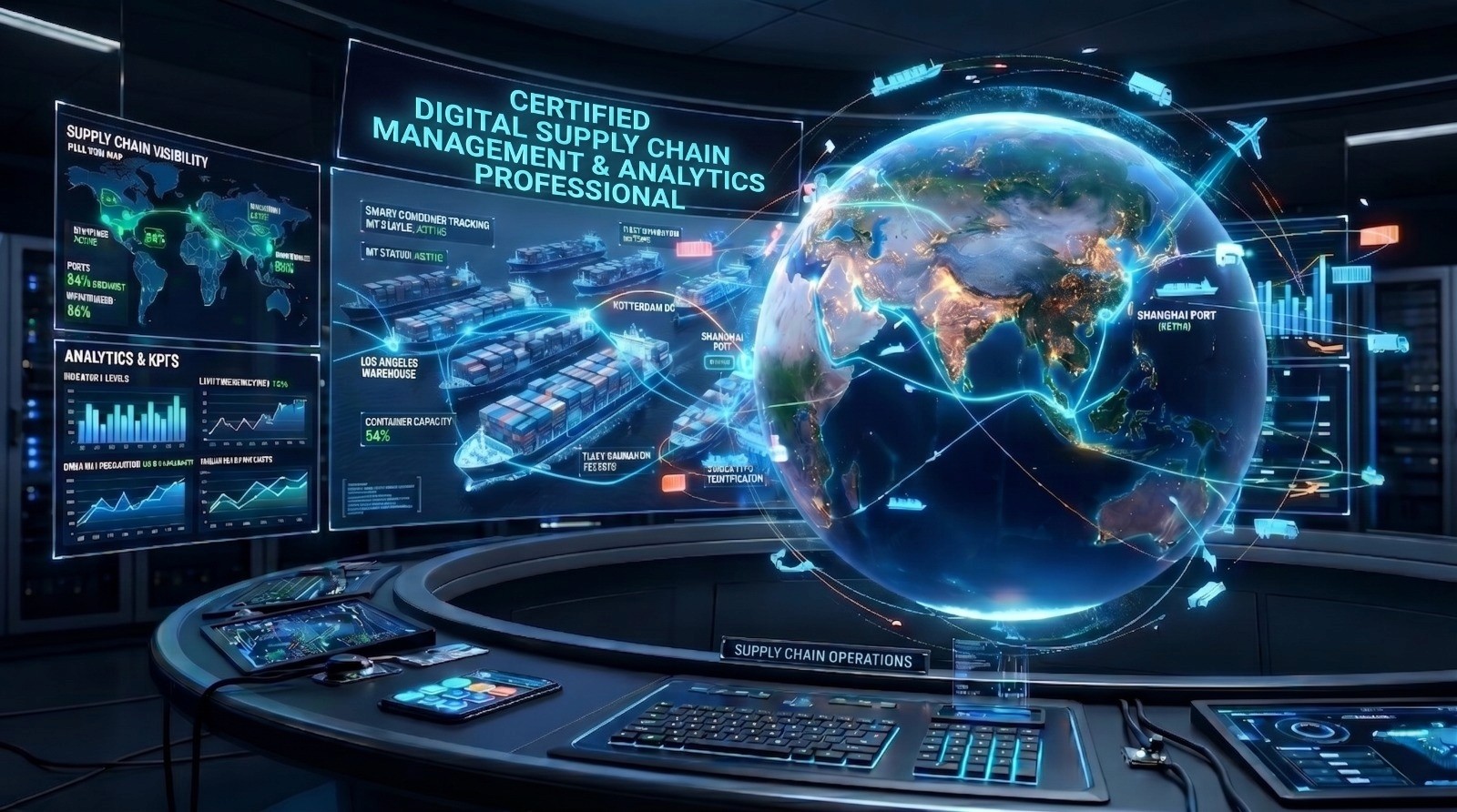
Certified Digital Supply Chain Management & Analytics Professional
Program Duration:
🕒
What is a digital supply chain?
A digital supply chain leverages digital technologies and data analytics to guide decision-making, optimise performance, and quickly respond to changing conditions. The data produced by existing supply chains are stored in data warehouses and analysed for actionable insights and power digital supply chains.Overall, as supply chains become increasingly crucial to the reliable delivery of goods and services, digital technology and professionals able to manage them also become important.
Traditional supply chain vs digital supply chain: How do they differ?
Traditional supply chains rely on the linear progress of goods and services from sourcing materials to manufacturing, distribution, and then to the point of sale. As each step of the supply chain relies on the step before it, delays at one point can create costly delays in another. Each step involves an assessment and planning process that can easily disrupt the schedule.
Digital supply chains use the data produced by every step to plan effectively and create dynamic responses when unforeseen delays arise. While traditional supply chains often lack actionable information, digital ones benefit from real-time big data that enables more efficient transportation and logistics management.
Why is getting trained in this course important?
Digital supply chain management & analytics is transforming how businesses plan, source, move, and deliver products. This program helps learners understand automation, analytics, forecasting, and data-driven decision-making in modern supply chains.
Why do companies hire professionals with this certification?
Companies hire certified professionals because they can improve visibility, optimize operations, and use analytics to reduce costs. Their expertise helps businesses build faster, smarter, and more resilient supply chains.
Our Approach
We provide practical, industry-focused training through real business cases, digital tools, and analytics-based learning. Learners gain job-ready skills aligned with current market demands.
Execution
The program is delivered through structured modules covering digital supply chain systems, data analytics, forecasting, automation, logistics technology, and performance management. Flexible schedules make learning convenient for all participants.
Results
Participants develop the ability to analyze supply chain data, improve planning accuracy, and optimize end-to-end operations. The certification also strengthens career growth in digital and supply chain roles.
Conclusion
The Certified Digital Supply Chain Management and Analytics program is ideal for professionals seeking future-ready supply chain expertise. It provides practical skills and recognized certification valued across industries.